
You are standing in front of the shelf, holding a jar of CBD hash or a bottle of oil labeled "30 mg." Your brain instantly starts doing math. Is this a tiny dose that will do nothing? Or is it a monster dose that might make you feel weird? You are not alone. This confusion hits almost everyone who tries cannabidiol (CBD) for the first time.
Here is the short answer: No, 30 mg is not a lot. In fact, for most adults, it is considered a low-to-moderate starting dose. But here is the catch-"a lot" depends entirely on your body weight, your tolerance, and what you are trying to fix. A 50 kg person feels 30 mg differently than an 80 kg person. And if you are using CBD hash, absorption works differently than with oils. Let's break down exactly where 30 mg sits on the spectrum so you can stop guessing and start feeling better.
The Reality of CBD Dosage Ranges
Before we judge 30 mg, we need to look at the landscape. The market is flooded with products ranging from 5 mg gummies to 1000 mg tinctures. Without context, numbers mean nothing.
| Dose Level | Amount per Serving | Typical Use Case | Sensation |
|---|---|---|---|
| Microdose | 1-10 mg | Maintaining balance, mild stress relief | Barely noticeable; subtle calmness |
| Low Dose | 10-30 mg | Mild anxiety, occasional sleep trouble, minor discomfort | Gentle relaxation without drowsiness |
| Moderate Dose | 30-60 mg | Chronic pain, significant anxiety, inflammation | Noticeable physical relaxation, easier focus |
| High Dose | 60-100+ mg | Severe chronic conditions, epilepsy, intense insomnia | Strong sedative effect, potential dry mouth |
As you can see, 30 mg sits right at the border of Low and Moderate. It is the "sweet spot" for beginners because it is strong enough to potentially work, but weak enough that side effects are rare. If you took 30 mg and felt nothing, don't panic. It just means your baseline tolerance is higher, or the product quality wasn't great.
Why Body Weight Changes Everything
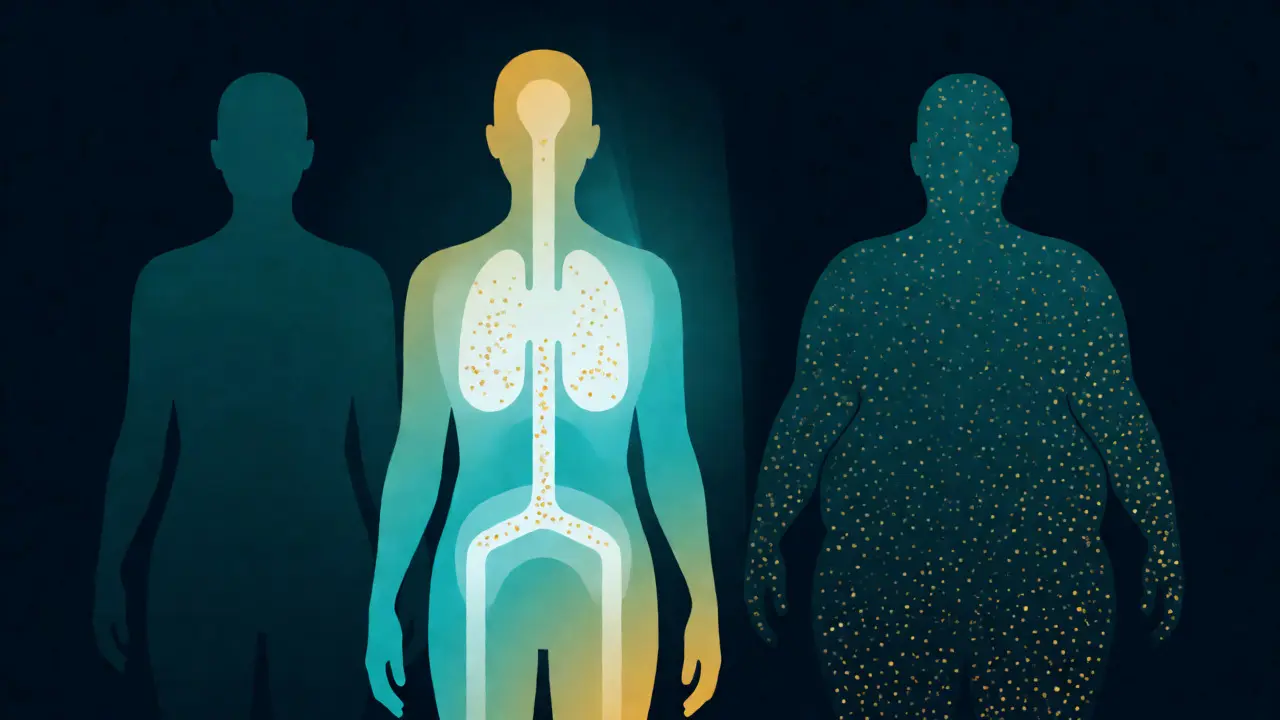
Think of CBD like alcohol or caffeine. A shot of espresso hits a 45 kg petite woman differently than it hits a 90 kg linebacker. CBD interacts with your endocannabinoid system (ECS), which regulates mood, sleep, and pain. The more tissue mass you have, the more CBD molecules you need to saturate those receptors effectively.
A common rule of thumb used by practitioners is 1-6 mg of CBD per 5 kg of body weight, depending on severity. Let's do the math for 30 mg:
- If you weigh 50 kg: 30 mg equals 3 mg per 5 kg. This is a moderate dose. You should feel effects within 30-60 minutes.
- If you weigh 70 kg: 30 mg equals roughly 2 mg per 5 kg. This is a low-to-moderate dose. Good for mild issues.
- If you weigh 90 kg: 30 mg equals 1.6 mg per 5 kg. This is a microdose. You might feel very little unless you are sensitive to cannabinoids.
If you are heavier, 30 mg is likely too low to tackle serious pain or severe anxiety. You might need to double it to 60 mg to reach that therapeutic threshold. Conversely, if you are light, 30 mg might actually be quite potent, especially if taken on an empty stomach.
CBD Hash vs. Oil: Absorption Matters
Your title mentions CBD hash. This is crucial. Not all 30 mg doses are created equal because bioavailability-the amount of CBD that actually enters your bloodstream-varies wildly by method.
When you smoke or vaporize CBD hash, the effects are immediate but wear off faster. Bioavailability is high (around 30-50%). So, inhaling 30 mg worth of hash gives you a quick, sharp hit of relaxation. It lasts maybe 2-4 hours.
When you swallow CBD oil or edibles, digestion breaks down some of the compounds before they reach your blood. Bioavailability drops to 6-20%. This means swallowing a 30 mg capsule is functionally similar to inhaling only about 10-15 mg. The effect builds slowly over 1-2 hours but lasts much longer, often 6-8 hours.
So, is 30 mg a lot? If you are vaping hash, yes, it's a solid session. If you are eating a cookie, it's a gentle nudge. Always consider how you are consuming it.
Tolerance and Sensitivity: The Hidden Variable
Have you ever noticed that your friend gets sleepy after one glass of wine, while you need three? That's genetics and habit. The same applies to CBD.
New users often report feeling nothing at 30 mg. Why? Because their ECS isn't downregulated yet. They need to build up levels in their fat cells. CBD is lipophilic-it loves fat. It accumulates in your body over days and weeks. Taking 30 mg daily for a week often yields stronger results than taking 30 mg once after months of no use.
On the flip side, some people are "super-responders." Due to genetic variations in liver enzymes (specifically CYP450), they process CBD slowly. For them, 30 mg might cause drowsiness or lightheadedness. Start low, go slow. There is no harm in waiting 24 hours to assess how 30 mg made you feel before increasing the dose.
What Can 30 mg Actually Help With?
Let's get practical. What problems does a 30 mg dose realistically solve?
For Anxiety: Studies suggest that doses between 25 mg and 50 mg can reduce subjective anxiety in social situations. 30 mg falls squarely in this range. If you have public speaking jitters or general worry, this is a reasonable place to start.
For Sleep: Insomnia often stems from racing thoughts. 30 mg taken 1 hour before bed may help quiet the mind. However, if your insomnia is severe, you might need 50-100 mg. Try 30 mg for three nights. If you still wake up at 3 AM, bump it to 45 mg next time.
For Pain: Here, 30 mg is usually the floor, not the ceiling. For joint pain or muscle soreness, most clinical trials use doses above 50 mg. If you are treating acute back pain, 30 mg might take the edge off, but don't expect total relief immediately. Combining topical application (cream) with oral intake (oil/hash) can boost local effectiveness without raising systemic dose too high.

How to Find Your Personal "Lot"
Forget what the label says. Your goal is to find your optimal dose. Here is a simple protocol:
- Start with 30 mg: Take it consistently for 3-5 days. Note any changes in sleep, mood, or pain.
- Evaluate: Did it help? Yes? Stay there. No? Increase by 10 mg increments every 3 days.
- Watch for Side Effects: Dry mouth, slight diarrhea, or fatigue are signs you've gone too high. Drop back down by 10 mg.
- Consistency is Key: CBD works best when steady levels are maintained. Skipping days resets the progress.
Remember, more is not always better. Once you reach the point where extra milligrams don't add benefit, you've hit your plateau. Spending money on unnecessary extra CBD is wasteful.
Quality Check: Is It Really 30 mg?
In the Czech Republic and EU, regulations require accurate labeling, but mistakes happen. Some cheap products contain less CBD than stated. Others might have THC traces (though legal limits are strict, under 0.3% or 0.2% depending on current laws). If you buy CBD hash, ensure it comes from a reputable source with lab tests (COA - Certificate of Analysis).
A COA tells you two things: How much CBD is actually in the product, and whether it contains pesticides or heavy metals. If a brand doesn't provide a QR code linking to a third-party lab test, treat the "30 mg" claim with skepticism. It might really be 15 mg, making it even less "a lot" than you thought.
Can I overdose on 30 mg of CBD?
No, you cannot fatally overdose on CBD. Even doses up to 1500 mg daily have been studied safely in humans. However, 30 mg could cause mild side effects like drowsiness or dry mouth if you are sensitive. If you feel dizzy, drink water and wait it out.
Will 30 mg of CBD make me high?
No. CBD (cannabidiol) is non-psychoactive. Unlike THC, it does not bind strongly to CB1 receptors responsible for the "high." Legal CBD products in Europe must contain less than 0.3% THC, which is insufficient to produce intoxicating effects at a 30 mg dose.
How long does it take for 30 mg CBD to work?
If vaped or smoked as hash, effects begin in 10-15 minutes. If taken orally as oil or edible, it takes 30-90 minutes to kick in due to digestion. Peak effects usually occur 2-4 hours after oral consumption.
Should I take 30 mg CBD with food?
Yes, absolutely. CBD is fat-soluble. Taking it with a meal containing healthy fats (avocado, nuts, olive oil) can increase absorption by up to 4 times compared to taking it on an empty stomach. This makes your 30 mg dose significantly more effective.
Is 30 mg enough for chronic pain?
For many people, 30 mg is a starting point but may be insufficient for severe chronic pain. Clinical studies often use 50-100 mg for arthritis or neuropathic pain. Monitor your response for a week; if pain persists, gradually increase the dose.


Napsat komentář